Abdulkadir Osman (25) came to the Netherlands from Somalia four years ago and has been residing in Amsterdam ever since. His path from the asylum reception center to stable housing in the city reflects one of the main themes of Amsterdam’s municipal elections on March 18, 2026: housing and integration of newcomers.
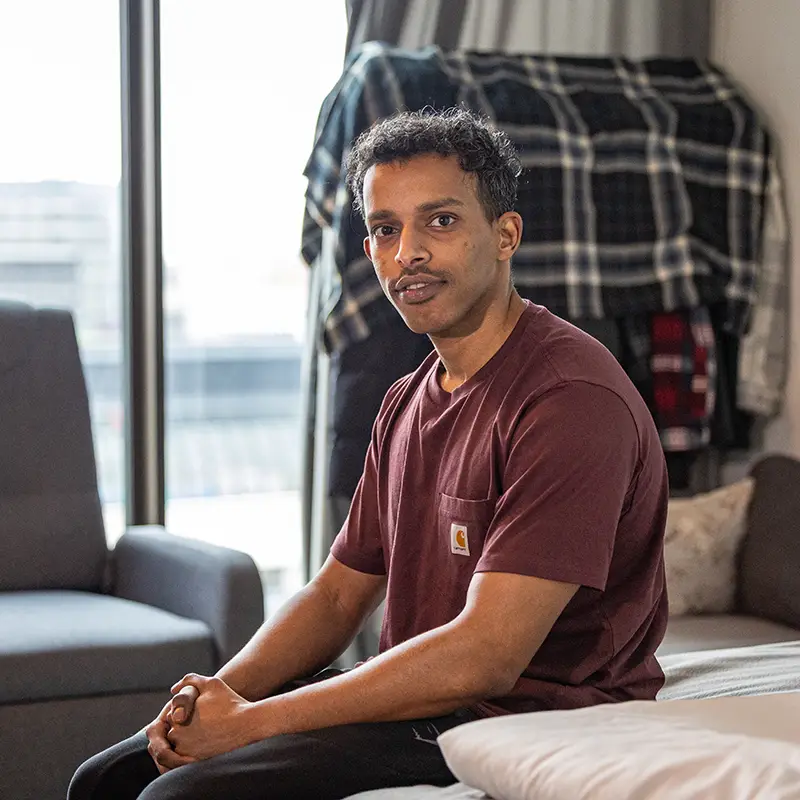
I visit Abdulkadir in his 21-square-meter studio in a building in Amsterdam-Zuid, where mostly students live. He himself studies information technology and works part-time in logistics. The room overlooks Amsterdam RAI station; from his window he sees trains coming and going all day, as a constant reminder of connection and movement.
The room is simply but carefully furnished: a single bed against the wall, a small television, a compact desk containing his laptop and a neat stack of notebooks. In the kitchen, basic kitchen utensils are displayed on shelves. After years of uncertainty, for Abdulkadir, this room represents independence and control.
“When I first came to Amsterdam, I was scared,” Abdulkadir says. “It’s a big city and I was alone. I didn’t know where to start.” Like many status holders, he first stayed in an asylum shelter. Later, after he received a residence permit, he joined a lodging scheme and lived with a Dutch host family for nearly five months through Takecarebnb. Initially, he hesitated. “I saw the announcement at the office, but I was not immediately interested. Only when the Central Agency for the Reception of Asylum Seekers contacted me and I had consulted with my family did I agree.”
Gorge
The experience changed his view of society. “In the asylum center, I felt like although I lived in the city, I was outside of it. There was a gap between me and Dutch citizens,” he says. His time with the host family helped him improve his Dutch and understand society better. “I noticed that we were more alike than I thought.”
For almost two and a half years, Abdulkadir has lived in his current home in Amsterdam-Zuid. He pays rent and shares the building with many young residents, including students. “Here I feel equal,” he says. “Whether someone is Dutch or a refugee, everyone is treated the same. That gives me a sense of belonging.”
So finding stable housing was a decisive factor in his life. “In the asylum center, your main concern is getting housing. You can’t really plan your future. Only after you find that, your motivation grows.” He compares stability to roots in the ground; “It makes you grow.”
Realistic
Still, uncertainties remain. Abdulkadir is registered with a social housing association, the system for distributing social housing in the region, but he does not understand exactly what his position on the waiting list is. He is also uncertain about the terms and duration of his current lease. “Some things are not completely clear to me, especially how long I can stay and how an extension works.”
For status holders who received their residence permits in 2021 or earlier, the upcoming elections offer an opportunity to influence local housing policy. Abdulkadir believes refugees are often portrayed negatively in political debates. “We are presented as a problem,” he says. “But we can actually be part of the solution. Many young refugees study, work and contribute.”
When asked if he plans to vote, Abdulkadir replied that he is for practical solutions. “I want a party that is realistic and not extreme,” he explains. A party that oversees what voters really need. For him, housing is not just a place to sleep. It is the basis for getting an education, working and participating in society. In his 21-square-meter room overlooking the railroad tracks, a future is now forming that once seemed unattainable.
Author: Kamiran Sadoun
Photographer: Fadel Dawod
Courtesy of Takecarebnb
Housing and new arrivals in Amsterdam
Amsterdam is facing an unprecedented housing crisis. With an estimated shortage of 350,000 homes nationwide, a significant portion of which affects the capital, finding an apartment has become very difficult (remoters.io). The waiting time for social housing in many areas averages 13 to 15 years, according to WoningNet.
Ali Jawad (37) is from Lebanon and now lives in Amsterdam. He received his residency status in 2021, after a difficult journey through asylum centers. Mental health is crucial to him. Without proper care, you lose your grip on life, he says. Now he helps others and urges people to vote.
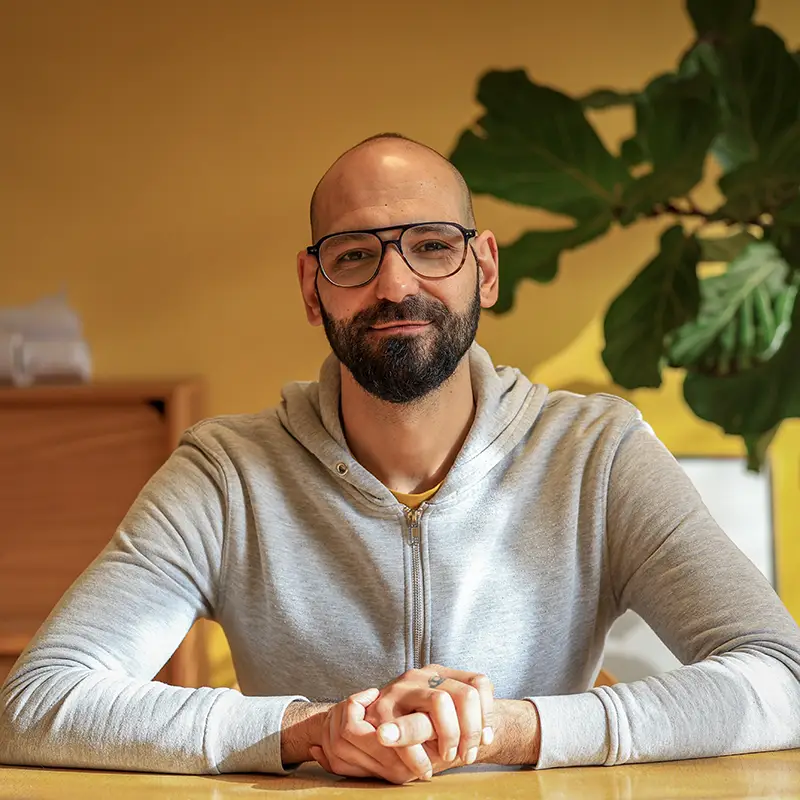
Ali fled Lebanon because of personal and community challenges. In his homeland, he studied music and theater, followed by a post-graduate degree in music therapy. He worked with children for six years, providing psychological support and treating trauma with music. “That gave me a sense of purpose,” he says.
But in the Netherlands, everything began differently. Full of hope, he arrived in May 2019. “There was joy. I thought: finally I am building a life here.”
Reality hit hard. After six months came the shock. Long waits to get residency status, moves between asylum seekers’ centers in Budel, Wageningen and Arnhem. Each time, he had to quit his therapist and start over somewhere else. “That broke the connection,” Ali says. “In therapy, relationships and trust are everything. But I knew: I won’t stay in the same AZC for long.” He felt isolated. “I didn’t understand anyone around me. Conversations flew by, but I was on the outside.”
Language as wall
Ali struggled with his gender identity, anxiety, depression and PTSD from the war in Lebanon. “The first year I still had strength. After a year, despair came.” Language was like a wall: therapy in English felt superficial. “I wanted Arabic, my mother tongue. An interpreter doesn’t help with sensitive pain.” Job applications from 2022 stalled. “Hardly any job interviews. I felt useless.”
In Amsterdam, he slowly found support. His family doctor referred him, despite waiting times. At the OLVG hospital, he did EMDR; “Eye Movement Desensitization and Reprocessing,” therapy to process unpleasant, traumatic memories. “As a result, I recovered tremendously.” Now for more than a year he has been attending therapy at Kaleidos, an organization that offers specialized therapy for lhbti individuals.
BOOST Amsterdam became his anchor: “Not therapy, but activities like music and language. I meet people, feel at home.” As a volunteer, he translates, helps with e-mails and participates in music groups. “I recognize their stories: loneliness, language barriers, a sense of inferiority. We all carry trauma with us.”
Voice for change
Ali sees how mental problems block integration. “Newcomers feel alone until they master the language. A therapist in your own language gives hope.” He advocates for change. “There should be therapists who speak the client’s native language. The system is limited to Dutch or English.” For the community: more culturally sensitive care, shorter waiting lists.
Mental health colors Ali’s vote in municipal elections. In Lebanon, he didn’t vote: “What did my vote matter?” Here, that changed. “When I felt part of society, I realized: voting changes things.” He advises status holders: “Be curious. Ask what parties have to offer. Voting connects you to the culture.” For Ali, voting represents recovery. “Together we get better help. It’s our right and our duty.”
Author: Hisham Arafat
Photographer: Fadel Dawod
Mental health status holders in Amsterdam
Many status holders in Amsterdam struggle with psychological problems: 40% with depression, 35% with anxiety disorders, and 33.5% with PTSD(GGD Amsterdam, 2023). Language barriers and waiting lists impede care. The municipality invests in group Dutch courses, but there is too little capacity. More culturally sensitive therapists are also needed(SCP, 2020).
The City of Amsterdam passed a motion to better mentally support status holders(Parool, 2023), to reduce severe psychological problems and improve integration.
This election special was created in cooperation with Netwerk Nieuwkomers Amsterdam (NNA). The NNA is funded by the City of Amsterdam.
Yodit Kidane is from Eritrea and has lived in Amsterdam Nieuw-West since 2014. She primarily counsels young people coming to the Netherlands from Eritrea, and sees how their integration is often hindered by language.
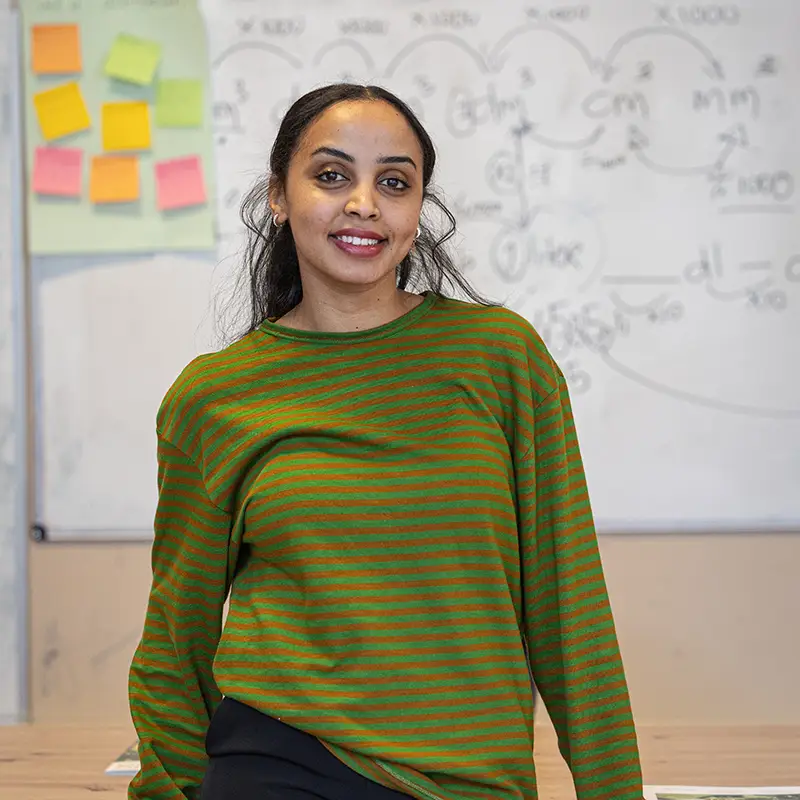
Yodit works at SEZO Foundation within the Eruna project, which focuses on young newcomers from Eritrea. The project offers support in the areas of education, integration and participation. Yodit’s work mainly consists of guiding Eritrean youth toward employment and social participation. “For many young people, this is their first foothold in the Netherlands,” she says. “They need someone to show the way and give them confidence.”
At Eruna, participants receive basic Dutch and computer classes. These classes help newcomers – including young people from asylum centers – on their way to language level A2 and the integration exam. There are also participants who have lived in the Netherlands for several years, but still need extra support with language skills.
In addition, young people take the Young Leaders Training, which is part of the Community Service Training (MDT) program. This program covers topics such as mental health, social media, finances, leadership, role models and making choices for the future.
Most of the young people are in their twenties. Often they fled Eritrea on their own. Family, religion and community play an important role in their lives. But as newcomers, they experience challenges of language and integration.
Support
Many young people are still living in an asylum seekers’ center or have only recently received housing. They are in the process of finding their way in the Netherlands. At Eruna they get help in their own language. For example, they come by with official letters they do not understand. Sometimes people who have been living in the Netherlands for a longer time, but still have questions, come to Eruna.
So the need for support is broad. Many young people want to work and are helped by Eruna to find suitable jobs and prepare their first resume. Finding work is not easy, mainly because of language barriers. “Language is often the biggest barrier,” explains Yodit. “Without language, it is difficult to find work, but also to feel confident in conversations or training.”
Also, young people often want to better understand how the Dutch education system works. Within Eruna there is room for both practical help and personal conversations. Although young people can also contact schools or other institutions, they often do not know exactly where to turn.
Uncharted territory
Within the Eritrean community, municipal elections are not very much alive, Yodit says. Many newcomers are initially concerned primarily with building their lives. Political participation is given less priority.
In addition, knowledge about the Dutch political system is sometimes lacking. In Eritrea, voting is not a natural part of daily life, so the idea of elections is unfamiliar territory for some. What also plays a role is that people are grateful for the opportunities they get here, so they sometimes look less critically at the choices within politics.
According to Yodit, the municipality could do more to provide timely and structural information about elections. For involvement, it would help if attention was paid to democratic participation not only just before elections, but continuously. Although in the field of education and integration, much is well organized in the Netherlands, there is sometimes a lack of easily accessible information.
Moreover, waiting times for language classes are long, when a quick start is crucial. “Especially in the beginning, people want to move forward,” says Yodit, “If they then have to wait a long time, that motivation can wane.”
Parents with children often need support in understanding the education system, for example around school recommendations in primary and secondary education. Information sessions in the home language would help with this. Subsidized homework help for children of newcomers would also make a lot of difference, especially for parents who are low-literate or do not speak the language well enough to properly guide their children. “Working on the children is working on the future,” Yodit said.
Since education determines one’s development, it is an important issue during voting. Yodit’s advice to voters is simple: exercise your right to vote, choose based on what you think is important and be well informed. “If you don’t understand something, ask for an explanation based on facts – not on someone’s opinion.”
Author: Ashraf Sahli
Photographer: Fadel Dawod
Since the introduction of the Integration Act in 2022, municipalities have been responsible for language education for status holders as part of the integration process. For many status holders, language level B1 is the starting point, the level you need, for example, for most secondary vocational education courses. Depending on learning ability, another learning route can also be followed.
Normally, status holders begin civic integration as soon as they have their own home. In Amsterdam, for several years now, status holders who are still living in an asylum seekers’ center can also already start the integration program.
Seare Tafere (63) is from Ethiopia and has recently been living in Amsterdam. He received his residence status in 2025, when he stayed in the Netherlands for more than two years. Since then, he has been looking for work, which he considers a basic necessity of life.
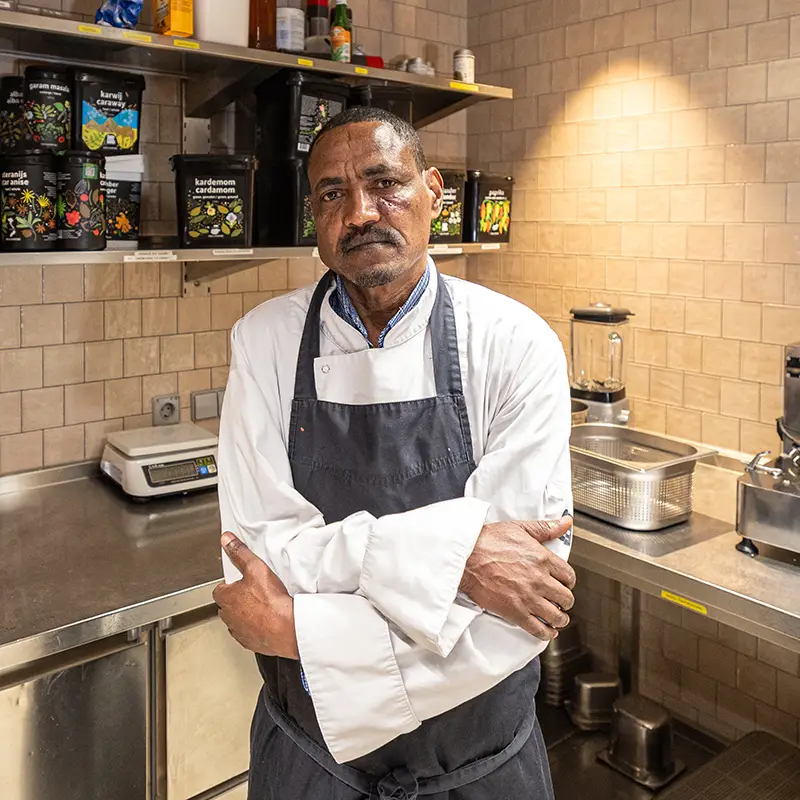
Seare fled his country because of political problems and conflicts between ethnic groups. He belongs to the Tigrinya, a large minority group in Ethiopia. Before it became dangerous, he worked in medical imaging for more than 30 years. First as a radiographer, later as a medical radiological technologist (MRT). Since there was a shortage of radiologists, he made X-rays, ultrasounds, CT and MRI scans and also made diagnoses.
In the Netherlands, his primary focus was on his safety. By now he has had a home in Amsterdam for three months and is learning the language. A1 he has now completed; this year he started with A2. He practices as much as possible on his own by listening, talking and meeting people.
But finding work remains difficult. “Language is the biggest barrier to that,” says Seare. And not all jobs suit his age, or physical condition. Lifting, bending or standing a lot is too hard. He is currently taking a six-month course in cooking and serving – but his heart is in his own field.
Contact
Ideally, Seare would like to work as an assistant radiographer. “I know what my level is. And that a technologist is not allowed to diagnose here. Assisting is fine by me.”
But working in a hospital requires perfect command of the Dutch language. Although his college degree is recognized in the Netherlands, formal professional registration is still pending.
He is also still awaiting his own contact. In the asylum center, COA helped with translation (Tigrinya and Amharic) and job search, but he did not have a BSN or status, which was a major obstacle. Now that he has both, language is the problem.
A contact can point him to opportunities, such as a volunteer internship in a hospital, for one to two days a week. “I would like to gain experience. Volunteering helps others and it costs nothing.”
Not dependent
Seare wants nothing more than to integrate and contribute. And for that, work is essential. “Work is health. Work keeps you sharp. Work is energy. It’s like oxygen, or water.” So he would much rather work than receive welfare, even if he can make ends meet on that. “I don’t want to be dependent. I want to help the elderly, or translate for refugees.”
As a status holder, Seare is allowed to vote in the March 18, 2026 municipal elections. He knows little of the details, but the principle is clear to him. He compares it to the saying that if everyone cleans the space in front of their house, the whole street will be clean; “Everyone’s vote has value, because together we can achieve something. That’s why I see voting as both my right and my duty.” His vote will go to a party with strong plans for newcomers – and work.
Author: Hisham Arafat
Photographer: Fadel Dawod
Work for status holders in Amsterdam
In Amsterdam in 2023, 36% of status holders had paid work – more than in many other cities and above the national average (Refugee Monitor 2025, Research and Statistics Amsterdam). Yet two in three still do not have a job. The municipality offers personal coaching through client managers, job hunters and the Trajectory Participation and Language (until April 2026). This helps with language, work experience and participation. A pilot (from 2025) is underway to help asylum seekers find work more quickly. Voting on March 18, 2026 could bring more money and better guidance for language and jobs.
Jephias Mundawaro (60) is a professional engineer from Zimbabwe and former university lecturer. But despite his many attempts, he cannot leverage his knowledge here.
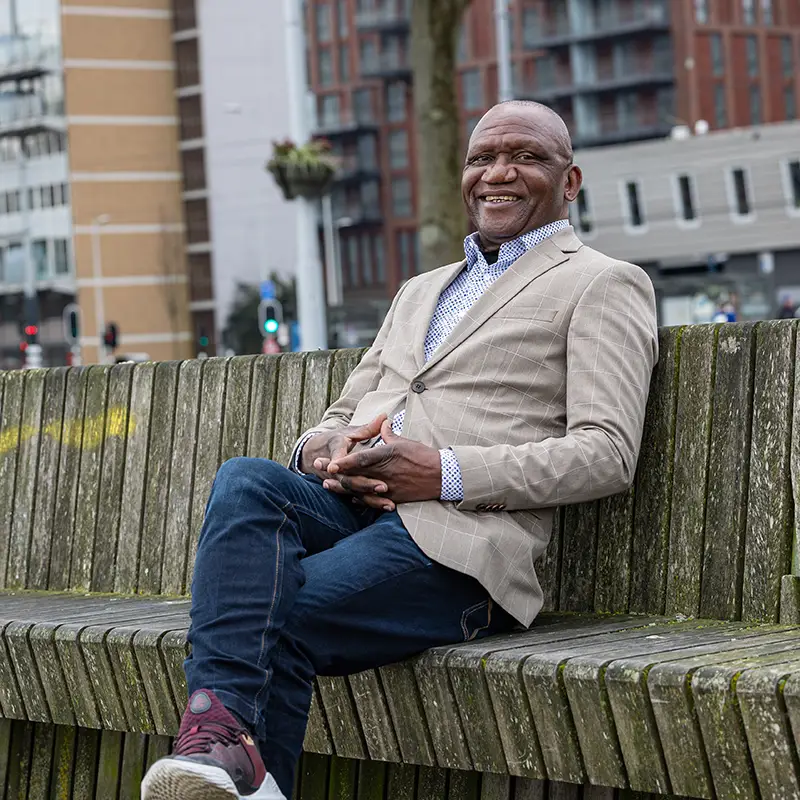
Jephias calls himself “still a teacher,” even though he hasn’t taught for years. “You don’t lose who you are,” he says. He taught at the University of Zimbabwe, the University of Johannesburg and Addis Ababa University. In Zimbabwe, he was also president of the university teachers’ union and helped organize demonstrations for better working conditions. He says he was arrested, mistreated and left unconscious in a forest. His back was broken in three places. He still receives medical treatment every four months in Amsterdam.
For seven years, Jephias has been living in asylum shelters and temporary housing. He stayed in Eindhoven and Roermond before arriving in Amsterdam. After leaving a night shelter, he became homeless. Despite his degrees, including additional studies in solar energy in the Netherlands, he had difficulty obtaining a residence permit – and thus work. After a rejected asylum application, he lived for a period as an undocumented migrant in the Netherlands. Eventually, with support from the Amsterdam Solidarity Committee for Refugees (ASKV), he was able to return to the asylum procedure. Now he lives in an asylum center in Amsterdam.
“My daily life was terrible,” he says softly. “I was always busy, had to review hundreds of assignments. Now I wake up, eat, sleep. My life just stands still.”
Proud
Without a residence permit, it is difficult for Jephias to practice his profession. Although he has Dutch qualifications and is registered as specializing in solar energy, employers say he needs a permit. “They say I can clean in a supermarket,” he says. “But I am an engineer. I’m proud of my profession.”
He receives €14 per week. From that amount, he has to pay for transportation and personal expenses. “I used to earn the equivalent of €5,000 a month,” he says. “It’s degrading.”
And it’s not just about the money. Jephias hasn’t seen his family in seven years. He missed the weddings of his son and his daughter. The uncertainty also affects his mental health. He is currently receiving psychotherapy at a trauma center in Amsterdam and is on sleep medication. “You keep thinking: Will I ever get out of this situation?”
Involvement
Jephias feels that asylum seekers and undocumented migrants are often not heard in political debates. “When you come here as a refugee, your life stands still,” he says. “For an engineer, if you stop him, technology develops. It becomes difficult to keep up.”
Local policies on asylum reception and support for undocumented migrants are therefore important topics for the upcoming municipal elections. Municipalities are responsible for emergency shelter, social support and access to basic health care. According to Jephias, more involvement is needed. “People don’t know who we are,” he says. “But we can contribute. We can help move Amsterdam forward.”
Around his neck, Jephias still wears the keys to his old university office in Zimbabwe. He has been keeping them for seven years. “They have emotional value,” he says as he shows them off. “That office was my life. I still believe that that life can come back.”
At 60, almost sixty-one, he calls himself a warrior. He quotes Nelson Mandela: “There is a long road to freedom.” For Jephias, that road continues – this time in Amsterdam.
Author: Kamiran Sadoun
Photographer: Fadel Dawod
Undocumented migrants in Amsterdam
Between 10,000 and 30,000 undocumented people live in Amsterdam, according to the Ombudsman. This is a rough estimate because they are barely in the authorities’ sights. Many deliberately lead as invisible an existence as possible for fear of deportation. Undocumented migrants are not entitled to regular social benefits, but have access to medically necessary care under Dutch law.
The current administration wants to criminalize “unlawful residence. That plan has yet to be approved by the Senate. A majority of parties in the Amsterdam City Council have passed a motion saying they will not enforce the law, if it is passed.
Wafaa Al-Attas (47) is a creative producer within the cultural sector. She is originally from Yemen and has lived in Amsterdam New West since 2015. In her work, she ensures that there is space for the migrant’s original culture.
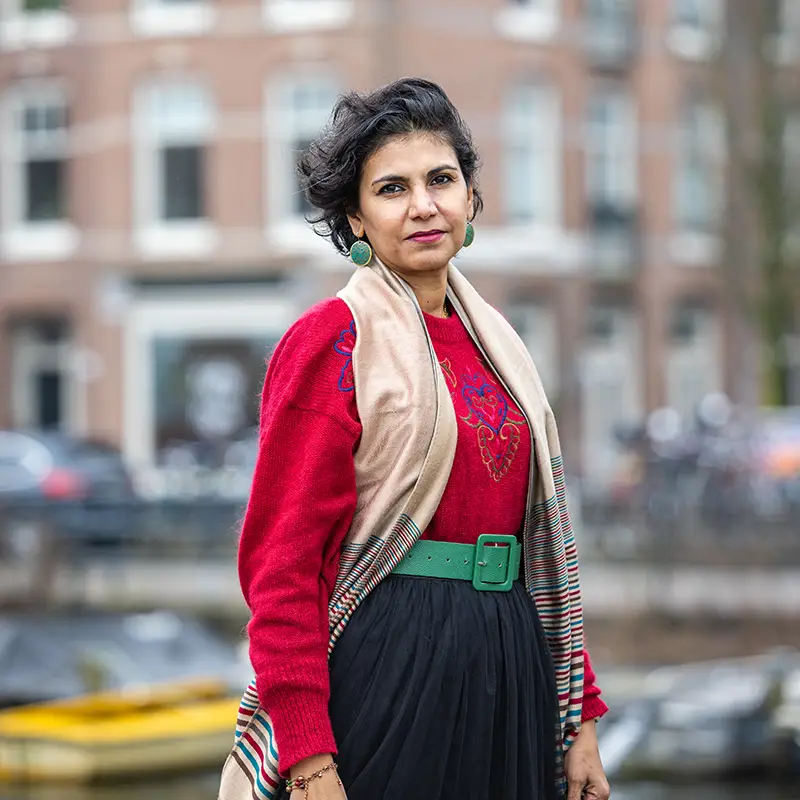
“For me, culture is not just music and art, but a set of principles, ethics and manners,” Wafaa says of her work. “Art is a means to express this whole, a way to convey a message and embody values.”
As an example, she cites hospitality, which is handled differently in each culture. Hospitality essentially means respect for the stranger, that is, welcoming someone who is different from you. In some cultures, the guest is king and is honored – not just as a social custom, but as a deeply held moral value.
But getting to know the other requires patience, and a willingness to delve into each other without judgment. It takes time to build a safe meeting space. “In that sense, our way of relating to the other is also a form of art, reflecting our culture and values,” Wafaa said.
Dialogue
In her work, the voices of others serve as inspiration and space is created for listening, for dialogue. “We don’t just create a performance, but an experience.”
Since culture plays a big role in making connections, Wafaa says it is important that policies do not focus on weakening that original culture of an immigrant – that will only thwart the integration process. And an important part of original culture is language. “One of the problems newcomers often encounter is a lack of information. That is often available mostly in Dutch. When communication is difficult, it brings a sense of distance.”
That raises an important point about civic participation, such as elections or neighborhood meetings: when people are called upon to participate, the ways to participate must be accessible and understandable to all. “If information is conveyed in multiple languages or more clearly, it can strengthen newcomers’ sense that they are actually part of the decision-making process.”
Now newcomers, who arrive with suitcases full of experience and knowledge, are asked to pretend that none of that matters anymore. The resulting gap is one of Wafaa’s artistic focuses.
“In my work I depict experiences around integration in an artistic way, with the aim of making them more visible within Dutch society. In this way I also try to make people more aware of their own responsibility regarding integration, for example, creating spaces where the position of the ‘guest’ shifts from someone who is constantly being asked to adapt to someone who brings knowledge and experience and can enrich society as a whole.”
Blind spots
Although initiatives are being taken from within the municipality to encourage encounters between people from different backgrounds, there are also the necessary “blind spots.” This is evidenced by the fact that some problems recur generation after generation.
“The key may lie in rethinking the concept of integration itself,” says Wafaa. “Do we start by asking the other person to adapt, or do we accept them as a full partner in society?” Until that basis is reviewed, the results will remain limited, even with sincere efforts.
When asked if she will vote, she replied that we must not give up. If we do not vote, the shortcomings of the system increase at the expense of the groups that are more culturally and socially vulnerable.
“I believe in electing individuals, not parties. When people with vision come to power and work together, they are able to improve reality.”
Author: Ashraf Sahli
Photographer: Fadel Dawod
Amsterdam has a huge cultural offering. There are many museums, theaters and venues for live music. Many cultural institutions in the city, as well as individual creators, are financially supported by the municipality. Political parties differ on how much money the municipality should spend on culture, and which cultural expressions are important. You can read more about their positions in the election programs.